


FREE FREIGHT ON ORDERS OVER $150
1-YEAR FOOTWEAR WARRANTY
24-MONTH WORKWEAR WARRANTY
FREE FREIGHT ON ORDERS OVER $150
Understanding Cold Storage Safety: Risks and Solutions
The Cold Storage industry has been around for hundreds of years and will stay around as long as frozen food does! Working in the extreme temperatures it involves is not everyone’s cup of tea but doing so can be very rewarding. Some of the aspects workers enjoy about working in cold storage include generous pay and rewards, tight-knit and team orientated workforces and a high paced environment that embraces technology.
However, the constant, unrelenting cold is not only uncomfortable, it can also pose a serious hazard to your health. You must be aware of the impact the cold has on your body and internal systems to stay safe in your job in cold storage. This article will cover:
- How the human body responds to the cold
- The dangers that surround working in Cold Storage
- How to stay safe in Cold Storage
The good news is that despite the risks involved, if best practices are followed working in cold environments is not hazardous to health and can be a rewarding, long-term job role!
Do you want to keep this guide for future reference?
Click the button to download it as a PDF file!
How the body responds to the cold
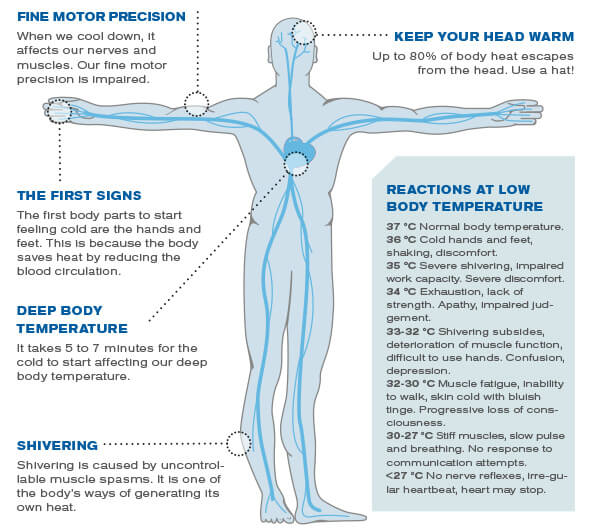
When the human body is exposed to the cold, it responds in two ways to reduce heat loss:
- By constricting the blood vessels in the skin and extremities (fingers/toes) to keep your core as warm as possible.
- By increasing the metabolic heat product rate, either by physical work you are doing, or by shivering. Shivering is an indifferent way of increasing your heat production though, as it increases oxygen consumption and reduces your effectiveness.
As your body responds in these ways, it is using more energy than it would in ambient temperatures. Hence, it is burning food and drink faster and will tire faster. More on this later!
Impact of the cold on your work performance
These initial impacts can lead to you becoming uncomfortable and can reduce your effectiveness on the job. You may lose dexterity and sensitivity in your hands as they become numb, meaning you will struggle to complete tasks such as using an RF scanner. Accidents increase in a cold environment because your performance is not at its peak, meaning you may lose concentration or tire faster.
The serious risks of working in cold environments
If you stay in cold environments for extended periods of time and/or are not wearing suitable protective clothing, your body may be at risk of more serious implications. These can include:


- Frostbite. This is where the fluids in the body tissues actually freeze, causing permanent damage to the skin. Body parts at the most risk to this are the extremities; fingers, toes, the nose and the ear lobes.
- Hypothermia. This is where your body temperature decreases significantly (below 35°C) and can ultimately (and quickly) lead to death. Early symptoms include confused though processes, loss of general motor control, slurred speech, aggressive shivering and a perception the victim feels hot. Hypothermia is rare in cold storage however and can be avoided through protective clothing that is adequate, and importantly, not damp or wet.
- Long term conditions. Conditions such as arthritis, rheumatism and bronchitis are commonly associated with the cold, and may only come out years after working in the cold. Muscle and tissue damage can also occur.

Other dangers you should consider
Cold Stores and Warehouses often have poor ventilation, which presents a hazard. Any gases or contaminants, such as LPG or fumes from forklifts, will not easily escape and could be dangerous for those working in the room. Another thing to consider is ammonia is often used for refrigeration which can be deadly, should there be a leak on site. If you are worried about any irritating smells inside the cold store you should report them quickly to your supervisor.
Another area to focus on is door openings between different areas. Because of the changes in temperatures or conditions, ice/water/condensation can build up in these areas, making them extremely slippery and dangerous.
How to stay safe working in cold storage
1. Take warm up breaks

Often employers will allow you to take warm up breaks every hour if you are working full time in the freezer. These are generally about 10 minutes long – just enough to get out of the freezer and make yourself a warm drink and snack! An energy drink like Milo or Ovaltine is a great idea as it will refuel your body for the next shift. Ensure you choose a nutritious and energy-rich snack like fruit or muesli bars, rather than just what you ‘feel like’ (potato chips, sweets, cookies etc).
Make sure you take these warm up breaks, even if you aren’t feeling cold at the time, as it is vital to keep your body temperature at a moderate level. Keep your jacket and/or trousers on during the break to boost your body temperature.
2. Wear suitable protective clothing and PPE
Choosing suitable Cold Store Clothing
Choosing protective clothing that suits the environment AND job role you are working in is vital in keeping safe in a cold storage environment. Finding the biggest, warmest jacket you can find is NOT always the best option. Here are some best practices in choosing the right jacket and trousers:
- Depending on the amount of physical activity involved in your job role, you may actually sweat in your freezer gear! It may sound crazy, considering the environment is probably -20°C, but if your freezer wear is too warm you will sweat, making you damp and cold and at risk of cold injury.

- Wear multiple layers of clothing, rather than a single, heavy jacket. The air between each layer will provide better insulation and warmth, plus it gives you the option to open or remove a layer to avoid excessive sweating. It is important the inner layer is a material that ‘wicks’ moisture away from your skin, such as wool, polypropylene or polyesters. Avoid cotton, which will absorb the moisture and leave you damp and cold. Read more about layering in this article.
- Dry your freezer wear each night after work to ensure it maintains its insulating properties.
- Keep your freezer wear clean! Dirt or dust will fill up air cells in the clothing, meaning it will lose its insulating properties. If you company doesn’t wash your freezer wear, do it yourself! Ensure you purchase freezer wear that washes well, as some brands deteriorate after a couple of washes and get colder.
 Choosing suitable Cold Store Footwear
 Choosing suitable
 There are safety boots specifically designed for work in cold storage available on the market. You may or may not be provided with these by your company, but its well worth getting a pair yourself if they don’t.
Freezer boots with leather uppers are recommended, as it is porous, meaning your feet will be able to breathe and will sweat less. Boots with Thinsulate® lining such as the Gator are great and will keep your feet warm. If you’re working in a freezer, a boot with at least 500g of Thinsulate® is recommended.
Cold stores and freezers are often slippery places because of the ice and precipitation that builds up. Ensure the boots you get have a slip resistant sole; an SRC rating is recommended!
NOTE: If you can’t afford to invest in freezer boots, at least ensure your safety boots have composite safety toe caps, as steel toe caps get a lot colder and your toes will get cold quickly!
The type of socks you choose is also an important consideration. As we’ve mentioned already, don’t use cotton ones as they will absorb moisture and leave your feet damp and cold. Polypropylene versions are best for insulation. In terms of which thickness you choose, ensure they aren’t too tight inside your boots, as this reduces their insulating properties and may slow the blood flow in your feet, posing the risk of cold injury.
Choosing suitable Cold Store Headwear
There is a myth that you lose the most body heat out of your head, which isn’t correct. However, it is certainly important to keep your core and head warm, so invest in a decent beanie or balaclava. These are both available with insulation, which makes them breathable and warm. If you require eye protection as well, ensure they are separate from the nose and mouth to prevent the eye shields fogging up.

Choosing suitable Cold Store Gloves
As we’ve already alluded to, your hands are one of the extremities that get very cold, very quickly in a cold store. You must ensure you are always wearing thermal gloves in the freezer to keep your hands insulated and also to provide a layer of protection between you and any cold steel or equipment, which can damage your skin.
Thermal gloves are a very personal PPE item – you may hate the gloves that your colleague loves! Plus, your job role may require a certain amount of hand dexterity which can be hard to achieve wearing warm, but bulky, freezer gloves. For this reason, we suggest you get in touch with a cold store PPE expert to receive their recommendations of which gloves will be warm and dexterous enough to keep your hands warm without hampering your performance.
3. Maintain a healthy and balanced diet

A balanced diet and adequate liquid intake are essential to keep safe and productive in the freezer. As we’ve discussed already, when you are working in a cold environment you are using extra energy because the body is working to keep itself warm. The measures it takes to regulate body temperature, such as shivering, burns energy and dehydrates your body. In addition, freezer clothing, boots and PPE are sometimes bulkier than general clothing and will require more energy to move around in. To stay energised and hydrated:
- Eat a decent, balanced diet containing protein, carbs and natural fats and sugars to help fuel your body and maintain your performance. Avoid too much ‘comfort’ food that don’t offer any nutritional value, such as potato chips, meat pies etc.
- Drink plenty of fluids around and during your shift. Sports drinks such as Poweraid contain electrolytes which will fuel your body and help keep your hydrated.
- Avoid drinks with caffeine in, such as energy drinks, as they increase urine production, thus contributing to dehydration. They also increase the blood flow at the skin surface which can increase the loss of body heat.

Summary
While it is not everyone’s ‘cup of tea’, working in cold storage can be a rewarding career. However, there are certain unique dangers that the extreme cold environment presents that you must be aware of to stay safe in the cold store and maintain your performance levels and usefulness to the company.
In summary;
- Take warm up breaks
- Wear suitable protective clothing and PPE and,
- Maintain a healthy and balanced diet.


