Australian High-Visibility Standards: What They Are and How to Comply

Updated in 2024 in line with the changes to Australian hi-visibility standards.
Hi Vis clothing has become an industry ‘norm’ in Australia and throughout most of the world. Anyone ‘on the job’ is expected and required to wear it to remain visible to moving vehicles or machinery. However, it is important to understand the legislative requirements and standards to ensure your staff are wearing high visibility gear that is compliant. Just because their shirt is bright yellow doesn’t always mean they are compliantly dressed and safe from harm!
CAUTION: Watch out for Dodgy Hi Vis!
While all hi vis gear may look the same, there are some ‘dodgy’ brands of garments available in Australia that are non-compliant and unsafe to use. Manufacturing clothing to meet or surpass the AS/NZS standards is not always cheap, so some companies are willing to compromise on safety in order to maximise profits. As a reseller and manufacturer of high visibility clothing, we refuse to stock ‘cheap and nasty’ brands that are not compliant, so you can be sure our range is safe!
This article will run over the standards that relate to workwear and clothing, what they mean and how you can ensure the clothing you fit your team out with is compliant.
The High Visibility Standards Explained
There are a couple of main standards regarding high visibility garments.
AS/NZS 4602.1: 2024 – High Visibility Safety Garments for High-Risk Applications
This standard specifies the design of the garments used by employees who are exposed to hazards from moving vehicles, equipment or other high-risk situations. There are different classes within the Standard for different times of day:
- Class D – These garments are designed for use in the daytime only. They provide the wearer with high visibility under daylight conditions but are generally ineffective in providing visibility in darker environments. A typical example of a Class D compliant garment is a yellow/navy polo without tape. To meet this standard the garment must:
- Have an approved colour of hi visibility material that encircles the entire upper torso. The colours specified in the standard are Orange-red, Red, Yellow, Green, Pink, Orange and Yellow (restricted). The colour spectrum chart below shows the approved colours.
- The fluorescent fabric should cover at least 0.4m2 of the upper torso.
- Logos or text printed onto the garments cannot be included in the 0.4m2. Generally, a logo that is no larger than 10cm x 10cm shouldn’t affect the compliance of the garment.
- C
 lass N – These garments are designed to enhance visibility in low-light or nighttime conditions when illuminated by retro-reflected light, such as vehicle headlights. The AS/NZS 1906.4: 2023 standard specifies compliant reflective materials and their durability in terms of the number of washes. To comply with Class N, reflective tape must:
- Be at least 50 mm wide.
- Common tape patterns include Hoop, X-back, or H-pattern.
- The background fabric color is not restricted. For example, a black security jacket with reflective tape could meet Class N requirements.
- Class D/N – These garments meet both the day and night requirements we’ve outlined above. An example of a D/N compliant garment is a hi vis yellow polo with reflective tape.
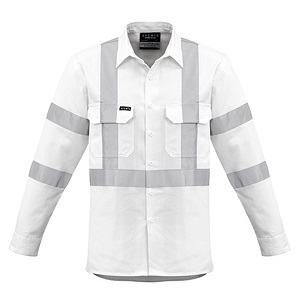 lass N – These garments are designed to enhance visibility in low-light or nighttime conditions when illuminated by retro-reflected light, such as vehicle headlights. The AS/NZS 1906.4: 2023 standard specifies compliant reflective materials and their durability in terms of the number of washes. To comply with Class N, reflective tape must:
AS/NZS 1906.4: 2023 – Retroreflective Materials and Devices for Road Traffic Control Purposes: High-Visibility Materials for Safety Garments
We’ve already mentioned this standard, but it specifies the photometric, colorimetric and physical properties for the various high visibility materials. It categorizes materials into three classes:
- Class F – Fluorescent fabric for Day Use Only (i.e. hi vis yellows, oranges etc.) The colour spectrum on the right from AWTA provides an effective visual representation of the approved colours.
- Class R – Reflective materials intended for night-time use only, such as 3M reflective tape. The durability of Class R materials is affected by washing, which gradually diminishes their reflective properties. Most reflective tapes used in Australia remain compliant for approximately 30 washes, though this may vary depending on the manufacturer and specific product.
- Class RF – (Fluorescent and Retroreflective) – Materials that combine both fluorescent and reflective properties, ensuring visibility in both day and night conditions. An example is the yellow reflective tape used on VicRoads’ clothing.
There is an additional classification of ‘W’ for wet compliance, which is normally only relevant for rain-wear garments.
Suitable Applications for High Visibility Garments
So far, we’ve covered how to ensure you purchase compliant high visibility clothing. It is also your responsibility to ensure the application of the clothing is suitable. The Standard has the following recommendations to ensure your team is using the gear correctly.
- Have company procedures and policies in place to ensure items are worn correctly and that workers understand why garments will be ineffective if not worn correctly and in the appropriate applications,
- Store garments so that fading of fluorescent material and degradation of retroreflective material due to heat are limited,
- Keep garments clean by washing/cleaning according to manufacturer’s instructions, and
- inspecting the garments on a regular basis and replacing them if badly damaged, soiled or faded. “In constant use, garments should be critically examined at 3-month to 6-month intervals.”
It is important to understand the high visibility properties any garment will lessen over time as it fades, stretches and is washed. Following the four recommendations above will ensure you replace your staff’s uniform regularly enough to keep them seen and safe!
UPF Protection
If your employees are working outside in the elements it is your responsibility to provide hi vis clothing that provides UPF protection. The relevant Australian Standard for this is AS/NZS4399 (UV Protection), and you should ensure the UPF rating for the clothing you purchase is in the 40-50+ Excellent Category.